
Difference Between Fixed-Barrel and Break-Barrel Air Rifles
At first glance, they may seem almost identical. They shoot pellets, have a stock, a scope… and create that classic thought: “Basically, this must all be the same thing.” Spoiler🤫: it’s not!
And trust us, once you start getting into the world of air rifles, you quickly realize that the difference between a fixed barrel and a break barrel is not just in the name. It’s in the way they load, the shooting feel, the accuracy… and even the experience you’ll have every time you pull the trigger.
Some people love the simplicity and practicality of break barrel air rifles. Others would never trade the stability and consistency of a good fixed barrel for anything.
And then there’s that classic moment when you buy one, only to realize later that another model might actually have made more sense for what you really wanted!
That’s why, before choosing “the most powerful”, “the best looking” or simply the one on an irresistible sale, it’s really worth understanding what changes between these two systems.
Because in the end, the best air rifle is not “the best in the world”. It’s the best one for what you actually need…
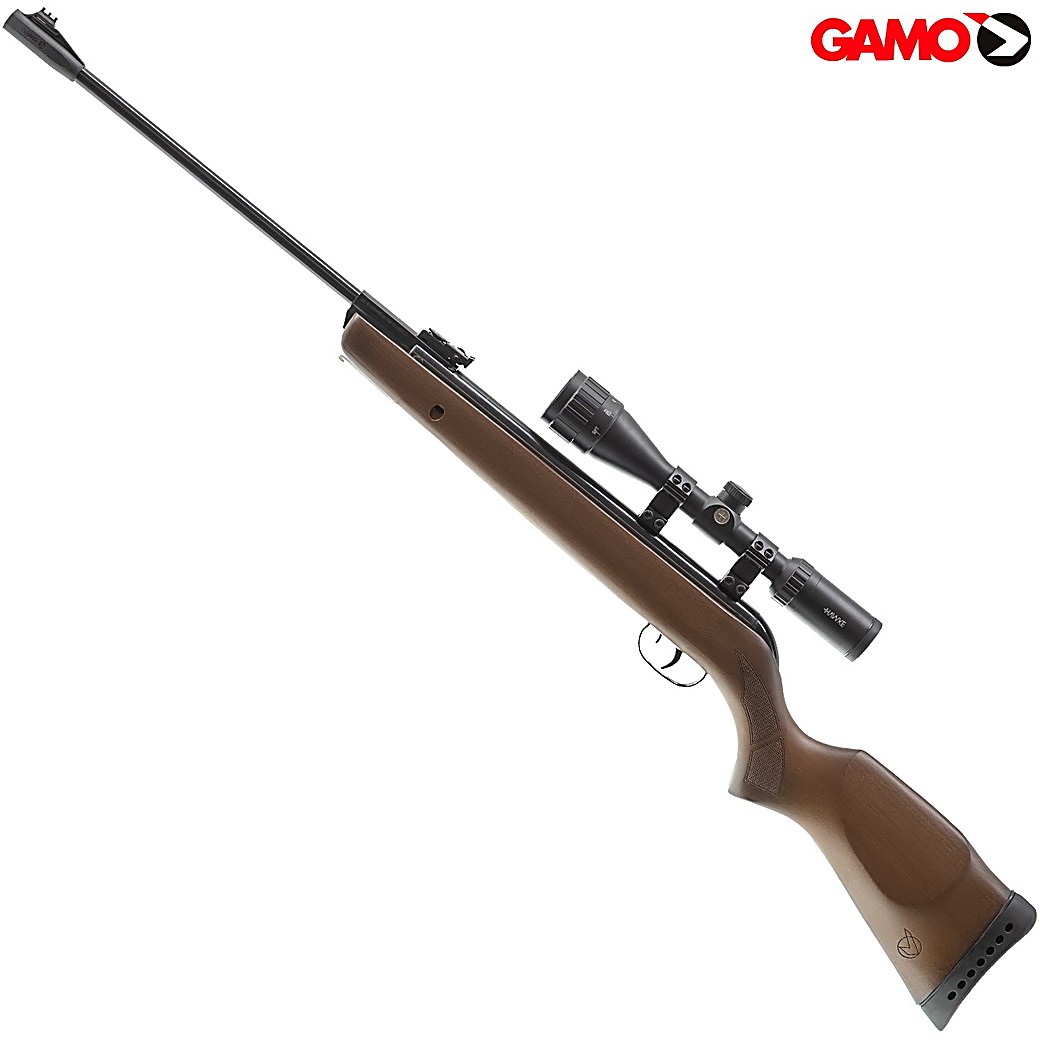
What is a break barrel air rifle?
If you’ve ever seen someone “break” the barrel of an air rifle to load it… then you’ve already seen a break barrel air rifle in action.
This is, without a doubt, one of the most well-known and widely used systems in the world of air rifles.
The operation is quite simple:
The barrel breaks downward, allowing you to cock the mechanism and place the pellet directly into the barrel. Then, you simply close it again and it’s ready to fire.
It’s precisely this simplicity that makes this type of air rifle so popular, especially among beginners.
So why is it so popular?
There’s a simple reason: it’s practical.
✓ Easy to load;
✓ Intuitive to use;
✓ Less complex for beginners.
✓ Wide variety of models available.
In practice, few things are more “straight to the point” than a break barrel air rifle.
Open. Load. Close. Shoot.
No major complications.
So what’s the downside?
Hold on… there’s no such thing as a perfect system.
Because the barrel itself moves every time you cock the rifle, small amounts of play or natural misalignment can appear over time with use.
And yes, that can eventually affect shooting consistency in some cases.
But pay attention: this does not mean a break barrel air rifle is “bad” or inaccurate. Far from it.
In fact, there are extremely accurate and very popular models among shooters of all skill levels.
And here at Mundilar, you can find several examples of break barrel air rifles, from simpler beginner models to more advanced options for those looking for higher performance and precision.
What is a fixed barrel air rifle?
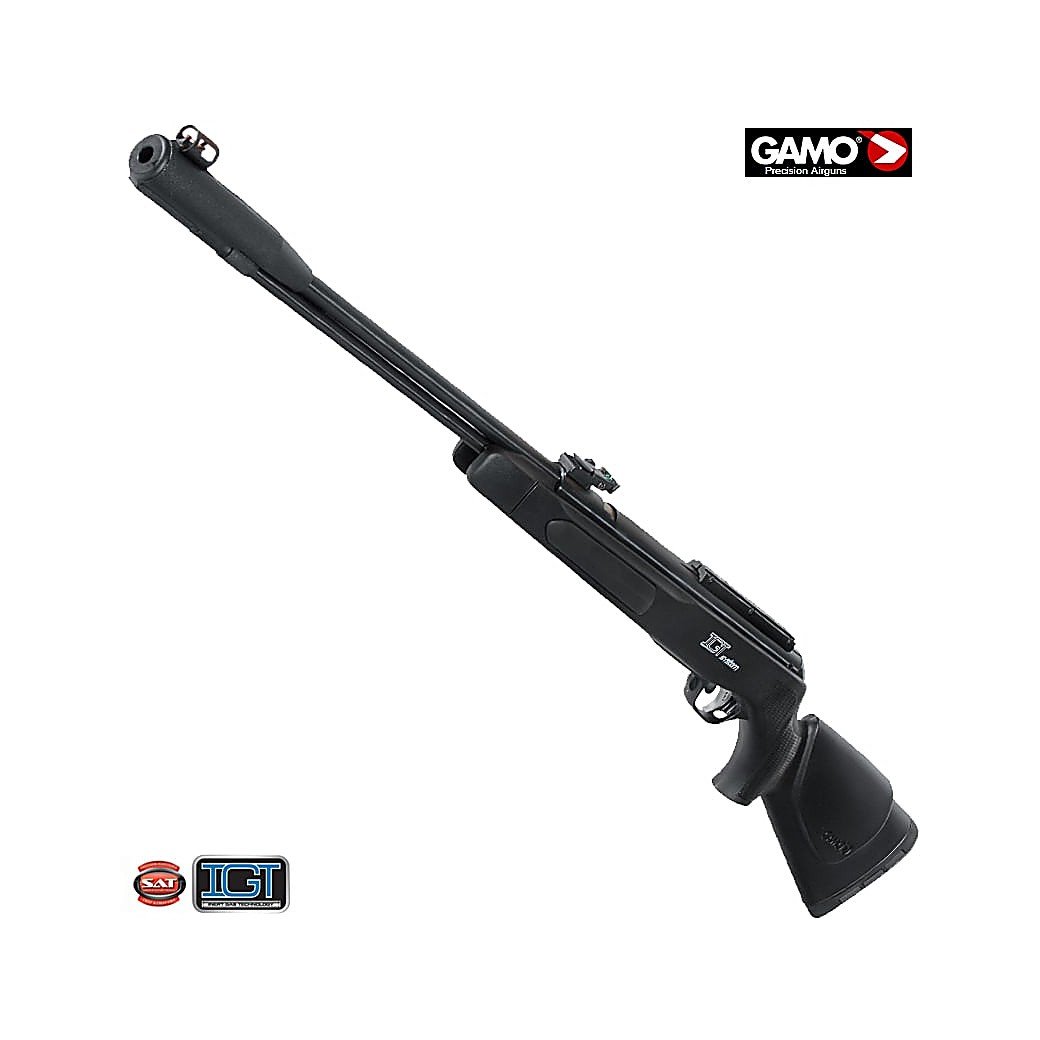
Unlike break barrel air rifles, here the barrel always remains in the same position. It does not open, tilt or move during loading.
And that’s exactly where the name comes from: fixed barrel.
So… how is it loaded?
In this type of air rifle, cocking is usually done through a side lever or an underlever system. The mechanism cocks the rifle without moving the barrel, while the pellet is placed into a dedicated loading chamber.
It may seem a bit more “technical” at first, especially for someone who has never used one, but this system offers a very important advantage.
✓ Because the barrel always remains fixed and aligned, the structure tends to maintain greater consistency over time.
And yes… that has a direct impact on accuracy.
So is a fixed barrel always more accurate?
Hold on… it’s not that simple.
There are extremely accurate break barrel air rifles. But, in theory, the fixed barrel system offers an important mechanical advantage: the barrel always maintains the same alignment.
In other words:
✓ Less movement;
✓ Less chance of mechanical play;
✓ Greater shot-to-shot consistency.
That’s exactly why many users who are more focused on precision and target shooting tend to prefer this type of system.
Are there any downsides?
Like almost everything in the world of air rifles, it depends on what you’re looking for.
Fixed barrel air rifles:
- Can be heavier;
- Usually have a slightly more complex system;
- May require some adjustment when loading.
But for many users, that small “learning curve” is completely worth it because of the stability and consistency they provide.
And just like with break barrel models, at Mundilar you can find several fixed barrel air rifle options for different skill levels, from casual shooting to more technical and precision-focused shooting.
What is the main difference between a fixed barrel and a break barrel?
At first glance, the difference may seem to be only the way the rifle is loaded.
But in practice… it changes much more than that.
We’re talking about differences in usability, shooting feel, consistency and even the overall experience you’ll have with the air rifle.
And no, this is not a battle of “which one is better”. It’s more about understanding which one makes the most sense for what you’re looking for.
✓ Loading system
This is the easiest difference to identify.
- On a break barrel air rifle, the barrel itself opens to cock and load the pellet.
- On a fixed barrel air rifle, the barrel remains stationary and loading is done through a separate system, usually with a side lever or underlever.
✓ Accuracy
Is a fixed barrel air rifle more accurate? In theory, yes… but there are nuances.
Because the barrel on a fixed barrel rifle never moves, alignment tends to remain more consistent over time. This helps shot repeatability and is one of the reasons why many users focused on precision prefer this system.
On a break barrel air rifle, continuous use may create small natural amounts of play in the barrel locking mechanism. And yes, that can slightly affect accuracy consistency over time.
But keep in mind:
This does not mean a break barrel air rifle is inaccurate. There are extremely accurate and highly popular models for sport shooting, leisure and training.
✓ Ease of use
Which one is easier to use? Here, the break barrel usually scores a few extra points.
The system is more intuitive:
- open;
- load;
- close;
- shoot.
Simple and fast.
Meanwhile, fixed barrel air rifles may require some initial adjustment, especially for those who have never used side lever or underlever systems.
Nothing complicated… just less “plug and play”.
That’s why, for many beginners, the break barrel feels more natural right from the start.
✓ Maintenance and wear
Does a break barrel air rifle lose accuracy?
With prolonged use, any air rifle experiences natural wear. That’s unavoidable.
In the case of break barrel air rifles, because the barrel is constantly moving, small amounts of play may develop in the system over time. And that can affect alignment consistency.
With fixed barrel air rifles, because the barrel always remains stable, that risk tends to be lower.
But again, that does not mean a break barrel will quickly lose accuracy or stop being a good choice. Everything depends on the rifle’s quality, maintenance and usage intensity.
✓ Weight and ergonomics
This part comes down a lot to personal preference.
Fixed barrel air rifles tend to feel more robust, may be slightly heavier and usually provide a more solid feel.
Break barrel models are often more practical, lighter in many cases and quicker to use on a daily basis.
Some people love the stability of a fixed barrel.
Others prefer the simplicity and agility of a break barrel.
In the end… both can be excellent choices. The important thing is understanding which one fits you and the type of use you’re looking for.
What type of air rifle should I choose to start with?
There’s no single “right” answer for everyone here. But there is a very clear trend.
For beginners, break barrel air rifles are usually the most recommended option.
And the reason is simple:
- They are intuitive;
- Easy to load;
- Practical for daily use;
- Usually require less initial adjustment.
Basically… you pick one up and quickly understand how it works.
Meanwhile, fixed barrel air rifles may make more sense for users who value precision, want a more technical experience or already know exactly what they are looking for.
In other words:
✓ Break barrels tend to be more “user friendly”;
✓ Fixed barrels usually appeal more to those looking for consistency and detail.
Honest advice?
If you’re still discovering the world of air rifles, starting with a good break barrel can be an excellent way to gain experience without making things too complicated. But if you’re the type of person who immediately likes analyzing groupings, precision and performance in detail… there’s a good chance the fixed barrel will start catching your attention.
Common mistakes when choosing between a fixed barrel and a break barrel
Choosing an air rifle seems simple… until you start comparing models and realize there are actually far more details than you expected.
And in the middle of so many choices, there are some mistakes that appear over and over again, especially among beginners.
Here are the most common ones:
- Choosing based only on price
Yes, price matters. But choosing only “the cheapest one” rarely ends up being the best long-term decision.
Very often, the price difference between models reflects build quality, consistency, ease of use and even durability.
And trust us, an air rifle that doesn’t match what you’re looking for almost always ends up costing more because sooner or later you’ll want to replace it.
- Ignoring ergonomics
This point is hugely underestimated…
Weight, balance, stock comfort, ease of loading… all of these things greatly affect the experience.
There are air rifles that look excellent on paper but simply don’t “fit” the shooter properly. And when that happens, you quickly notice it in both comfort and accuracy.
- Buying without understanding the intended use
This is probably the most common mistake of all.
Before choosing between a fixed barrel and a break barrel, it’s worth asking yourself: what do I actually want to do with this air rifle?
Leisure shooting? Target shooting? Training? Precision shooting? Occasional use?
Because an air rifle that’s perfect for casual shooting may not be the best choice for someone looking for more technical groupings, and vice versa.
- Assuming “more power = better”
Ah… the classic mistake. Many people look at power first and think: “the more powerful it is, the better.”
But in practice, it doesn’t work exactly like that.
More power can mean:
✓ More recoil;
✓ More vibration;
✓ Less comfort;
✓ More difficulty maintaining consistent accuracy.
A balanced air rifle suited to your purpose is far more valuable than simply choosing the one with “bigger numbers”.
In the end, the difference between a fixed barrel and a break barrel is not just in the way the rifle loads… it’s also in what you want to feel every time you line up your sights.
Some people love the practicality and simplicity of a break barrel. Others would never trade the consistency of a good fixed barrel for anything.
And the truth is this: the best choice is not the one that looks the most impressive on paper. It’s the one that makes you think “this is exactly what I wanted” after every shot.
If you want to explore different models from both systems, at Mundilar you can find several options for leisure shooting, beginners, training or more precision-focused use.
Still have questions?
Is a fixed barrel air rifle more expensive?
Usually yes. The system tends to be more complex and more focused on consistency and precision, which can be reflected in the final price.
Is there a difference in recoil between a fixed barrel and a break barrel?
There can be. Depending on the model and system used, some break barrel air rifles may transmit more vibration or recoil during shooting.
Which system usually lasts longer?
Both can have excellent durability with proper maintenance. However, fixed barrels tend to suffer less wear related to barrel movement.
Are fixed barrel air rifles harder to load?
Not necessarily difficult, but they may require some initial adjustment due to the side lever or underlever system.
Which system is better for long-distance shooting?
Many users prefer fixed barrels for longer distances because of alignment consistency, but everything depends on the rifle’s quality and the shooter’s technique.
Is there a weight difference between the two systems?
In many cases, yes. Fixed barrel air rifles tend to be more robust and slightly heavier.
Does the barrel type alone affect accuracy?
No. Accuracy also depends on the rifle’s quality, the ammunition used, the scope and even the shooter’s technique.
Is it worth investing immediately in a more advanced air rifle?
It depends on experience and goals. For some users, investing straight away in a higher-end model makes sense, while others prefer starting with something simpler and upgrading later.
Which system is better suited for sport shooting?
It depends on the level of demand and the type of shooting. For sport shooting focused on precision and consistency, many users prefer fixed barrel air rifles. For training, leisure and recreational shooting, break barrels are still an excellent choice.
Is there a difference in shooting speed between the two systems?
The barrel type alone does not define speed. Power depends more on the rifle’s internal system than on whether it is fixed or break barrel.
Which system requires less maintenance?
In general, fixed barrels tend to suffer less wear related to barrel movement. Even so, both require proper maintenance to ensure good performance.
For leisure and fun shooting, which one is usually better?
Break barrel air rifles are usually very popular for leisure shooting thanks to their simplicity, speed of use and ease of loading.
Is there a difference in comfort while shooting?
There can be. Weight, balance, recoil and ergonomics vary greatly from model to model and directly affect the shooting experience.
 Artigos Relacionados: