
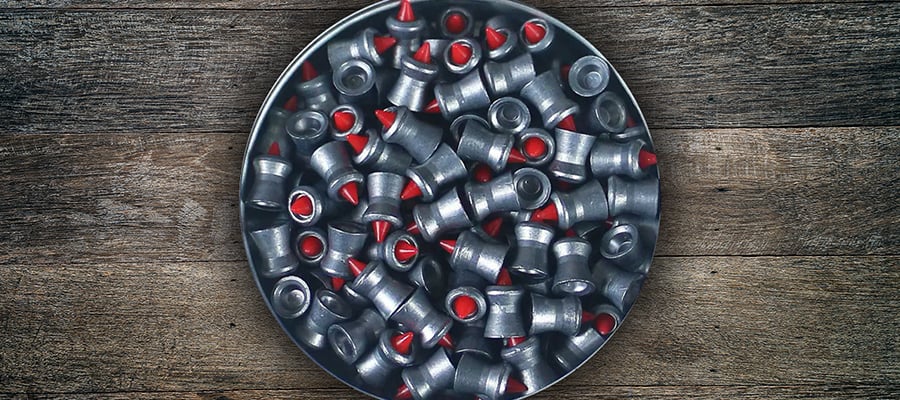
How to Choose the Ideal Pellet Weight to Improve Accuracy?
The rifle is tuned, the scope is zeroed, your position is right. You shoot… and each pellet decides to explore a different part of the target. Then the investigation begins: Is it the scope? Is it the wind? Or is today simply not your day?
Before you start adjusting everything that has a screw on it, there is one small detail that is often overlooked: the pellet you are using may not be the best match for your air rifle.
Pellet weight affects speed, trajectory and stability in flight and, as a result, can make a difference to accuracy and grouping consistency. And no, choosing the heaviest pellet on the shelf does not automatically mean you will shoot more accurately. Every air rifle has its own characteristics, and what works very well in a PCP may not deliver the same results in a spring-powered or IGT air rifle. In fact, even two air rifles of the same calibre can have different preferences!
So, how do you know what the ideal pellet weight is for your air rifle?
Throughout this article, we will look at how weight affects the shot, the differences between light and heavy pellets and, above all, how you can test different options until you find the one that helps you hit the bullseye.
Why does pellet weight affect accuracy?
Weight affects how the pellet leaves the air rifle and behaves until it reaches the target. A lighter pellet tends to leave the barrel at a higher velocity, while a heavier pellet tends to travel more slowly. This difference in speed affects the trajectory and how well the projectile remains stable in flight.
That stability is exactly what we are looking for. If the pellet behaves consistently from the moment it leaves the barrel until it reaches the target, it becomes easier to make several shots land close together. That is what we call a good grouping.
So why might your air rifle not be grouping well? Pellet weight may be one of the reasons. A projectile that is too light or too heavy for your rifle’s characteristics may not deliver the most consistent performance.
So instead of simply looking for “the heaviest pellet” or “the fastest pellet”, look for the one that works best with your air rifle!
Light or heavy pellet: which should you choose?
This is probably the first question that comes to mind when you have two tins of pellets in front of you: should you choose the lighter one or the heavier one? The less exciting but more accurate answer is: it depends on your air rifle and how you intend to use it.
What happens when we use a lighter pellet?
A lighter pellet tends to leave the barrel at a higher velocity. This can provide a flatter initial trajectory, which means the pellet experiences less drop over the first part of its flight.
Sounds perfect, right? Not always. Because it has less mass, a light pellet also tends to lose velocity more quickly and is generally more sensitive to wind and other external conditions.
What happens when we use a heavier pellet?
A heavier pellet tends to leave the air rifle at a lower velocity, but it may retain energy and speed better throughout its trajectory. Depending on the rifle and the distance, this can contribute to more stable performance.
But there is a limit here too. Using a pellet that is too heavy in an air rifle without enough power is also a mistake. That is precisely why there is no universal answer to the question “light or heavy pellet, which is better?”. The goal is to find a balance between weight, velocity and stability.
To better understand the main differences between a light pellet and a heavy pellet, check the table below and compare how each one typically behaves during the shot.
| Light pellet | Heavy pellet | |
|---|---|---|
| Muzzle velocity | Generally higher | Generally lower |
| Initial trajectory | Flatter | More curved |
| Velocity loss | Tends to be faster | Tends to retain velocity better |
| Wind influence | May be more sensitive | May offer greater stability |
| Energy throughout the trajectory | Tends to lose it more quickly | Tends to retain it better |
| Accuracy | Depends on the air rifle | Depends on the air rifle |
How do you find the ideal pellet weight for your air rifle?
After all this talk about weight, velocity and stability, you are probably expecting us to say: “use this weight and the problem is solved”. But the truth is that the best way to find the ideal pellet weight for your air rifle is to test.
Even two similar air rifles can produce different results with the same pellet. But firing two pellets from each tin and choosing the one that lands closest to the centre is not enough. For the test to be meaningful, it is important to create similar conditions and compare the results methodically.
How should you test different pellet weights?
- Choose several pellets to test
Start by selecting several good-quality pellets, preferably with weights that are fairly close to one another. This makes it easier to see how small changes in weight affect your air rifle’s performance.
- Set a distance and do not change it
Choose a fixed distance and keep it the same throughout the test. If you change the distance halfway through, you introduce another variable and the comparison becomes less reliable.
- Shoot several groups with each pellet
Fire several shots with each type of pellet while trying to keep the same position, support and similar conditions. The fewer things you change during the test, the easier it will be to determine whether the difference really comes from the pellet.
- Look at the grouping, not just the centre of the target
At this stage, do not worry too much about whether the shots are exactly in the centre. What matters most is the size and consistency of the group. If five shots land very close together, that is a good sign, even if they are a few centimetres away from the centre.
- Compare the results
After testing all the pellets, compare the groups side by side. The weights that produce the smallest and most consistent groups are the best candidates for your air rifle.
- Repeat the test before choosing a winner
Do not declare a winner after the first test. Repeat the experiment in another session to confirm the results. One good shot can happen by chance. Several good groups tell a very different story.
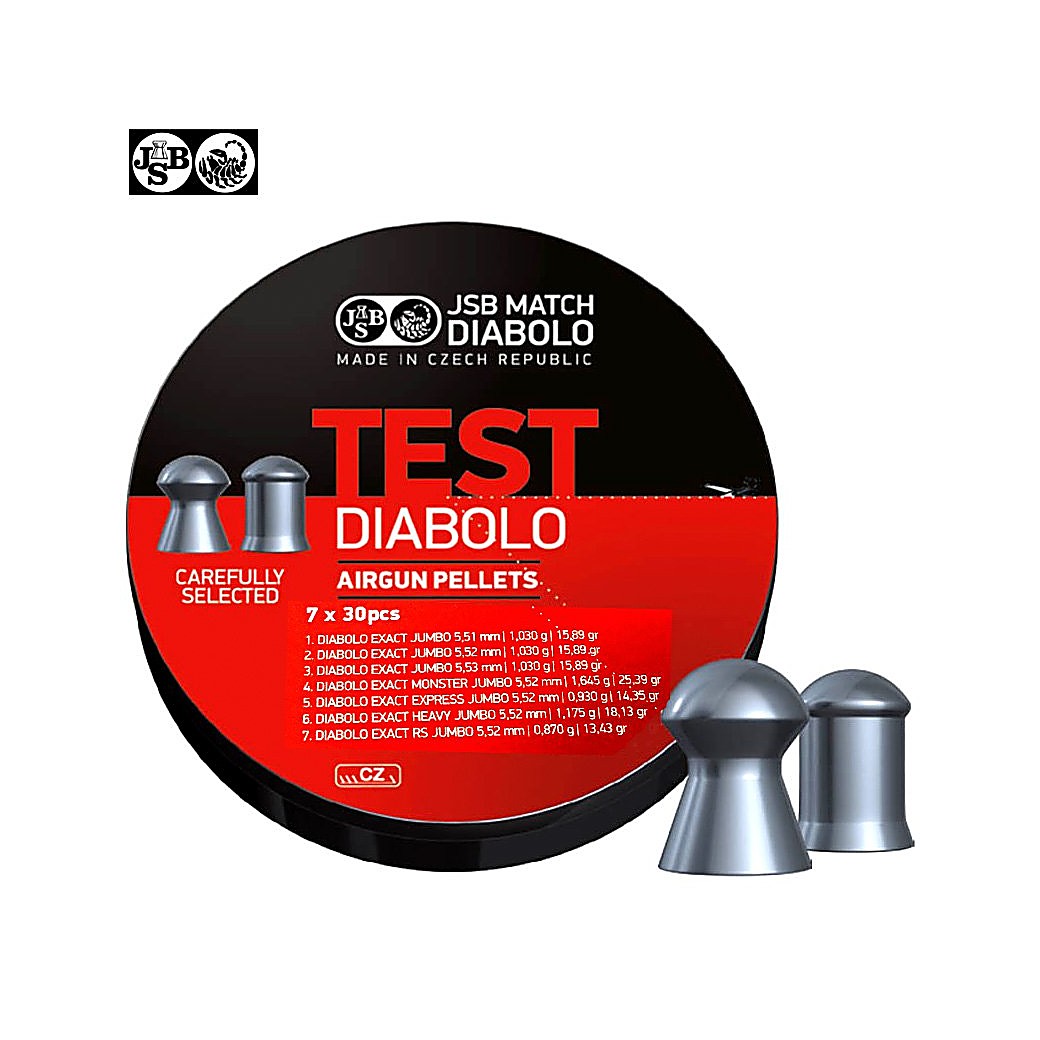
If you want to try different weights without buying a full tin of every option, pellet test packs are a practical solution. At Mundilar you can find different options that allow you to test several pellets and compare how they perform in your air rifle before choosing the one you will use regularly.
What pellet weight is suitable for each calibre?
Once you understand that weight makes a difference, another question naturally follows: how many grains should I use in my air rifle?
Before we go any further, there is one important rule: calibre alone does not determine the ideal pellet weight. The power of the air rifle, shooting distance and the barrel itself also affect the result. Even so, there are common weight ranges that can serve as a starting point.
The table below provides a quick reference for the most commonly used pellet weights by calibre:
| Calibre | Reference weight | Quick answer |
|---|---|---|
| 4,5 mm (.177) | 7 to 10.5 grains | This is one of the most widely used calibres for recreational and precision shooting. Medium weights often provide a good balance between velocity and stability. |
| 5,5 mm (.22) | 13 to 21 grains | Widely used in PCPs and more powerful air rifles. The ideal weight depends on power, distance and intended use. |
| 6.35 mm (.25) and above | Heavier weights | More common in powerful PCPs. Weight selection mainly depends on the air rifle’s ability to stabilise the projectile. |
Note: These values are only a reference. The best weight will always be the one that produces the best groups in your own air rifle.
Does pellet shape also affect accuracy?
✓ Quick answer: Sim. Weight is important, but pellet shape also affects how it behaves in flight. For precision shooting, Domed pellets are generally among the most commonly used options, while other shapes may be more suitable for different distances or purposes.
In other words, finding the right weight is important, but that is not the whole story. Two pellets with the same weight but different shapes can also produce different results in the same air rifle.
What are the most common pellet shapes?
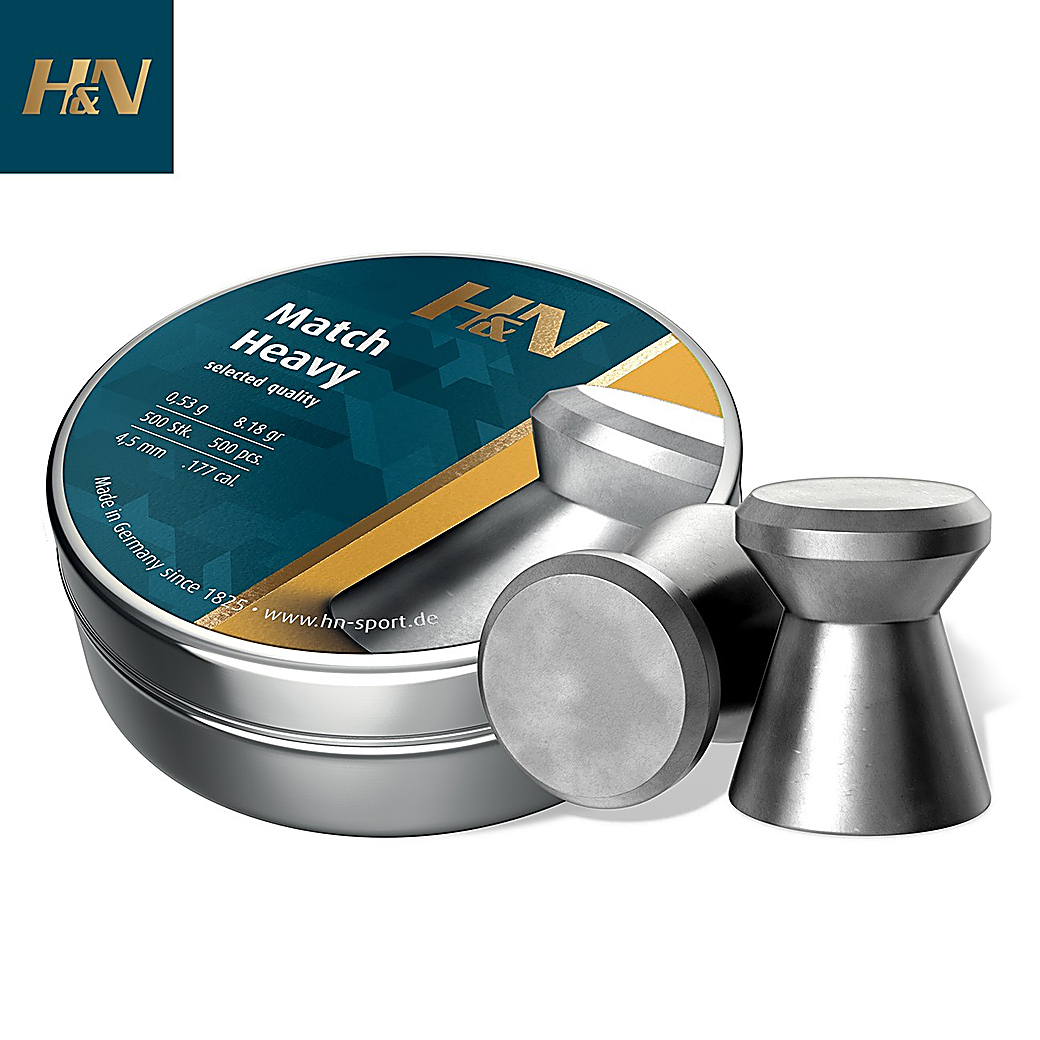
Match Heavy
Match Heavy pellets have an almost flat head and are widely used for target shooting, especially at shorter distances. Their shape creates a clean, well-defined hole in paper targets, making results easier to read. They are suitable for training and short-range precision shooting.
At Mundilar you can find Match Heavy pellets from different brands, in various weights and calibres, to help you find the option best suited to your air rifle.
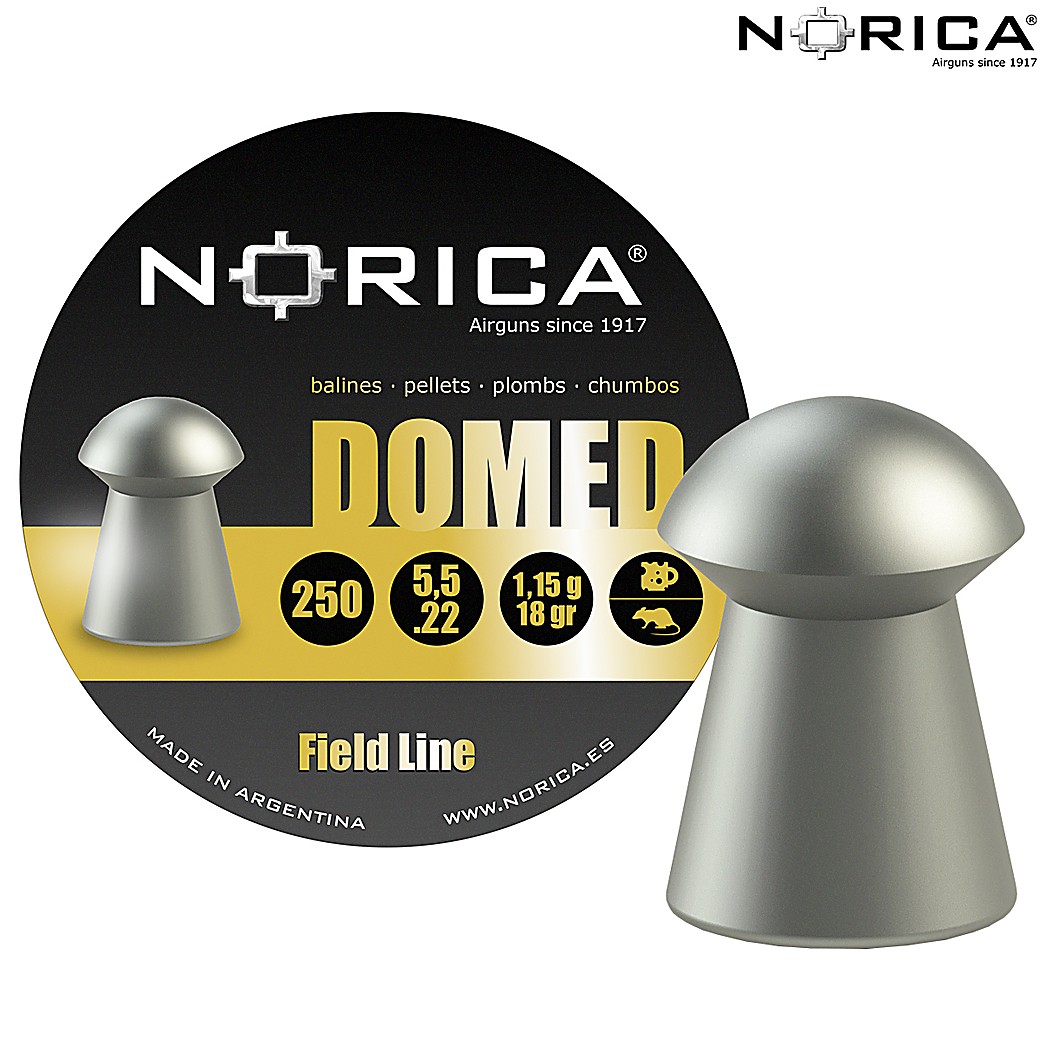
Domed
Domed pellets, easily recognised by their rounded head, are probably among the most versatile shapes. Their design promotes efficient aerodynamics and good velocity retention, making them very popular for precision shooting at different distances.
Among Mundilar’s pellet selection, you can find several Domed models available in different weights and calibres.
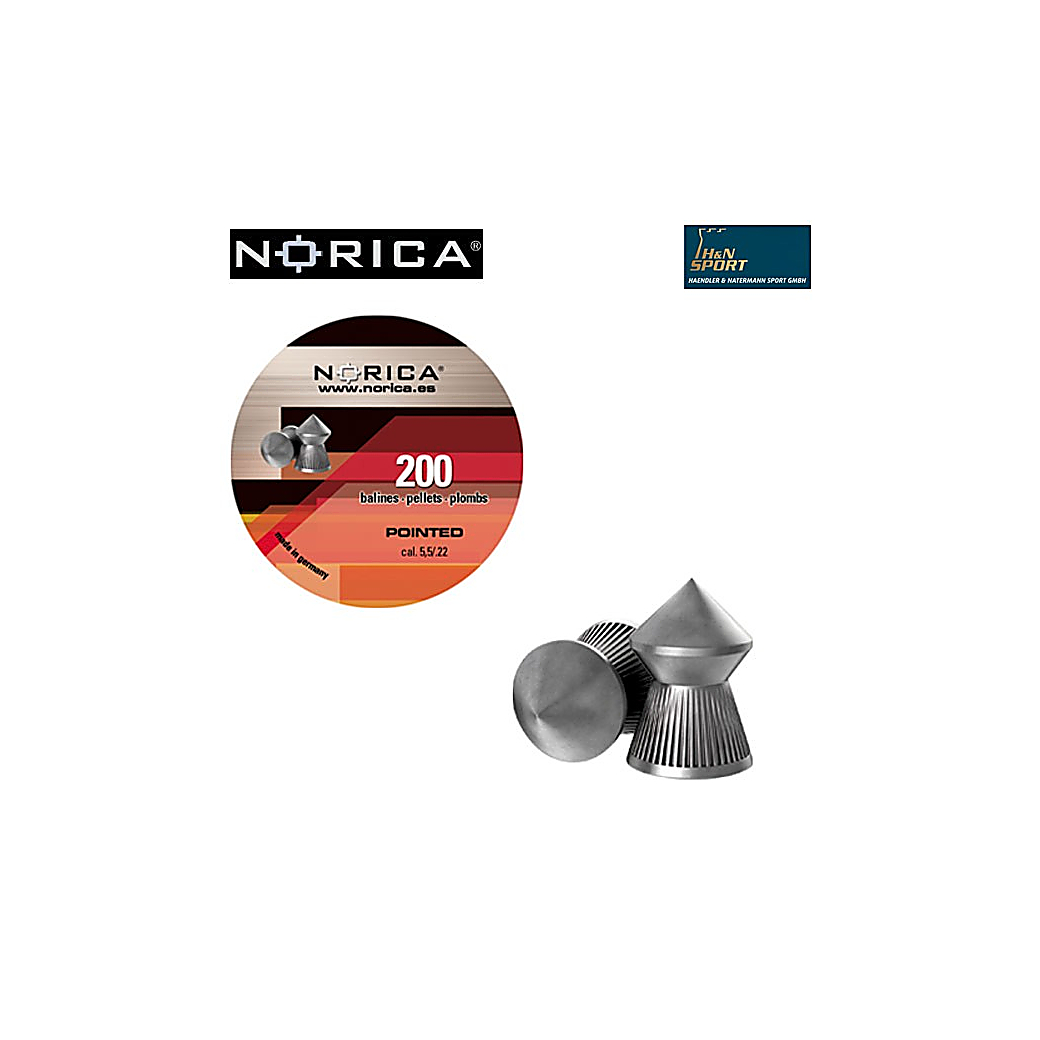
Pointed
As the name suggests, Pointed pellets feature a more pronounced tip. Their shape is mainly designed to favour penetration. Although they can perform well in certain air rifles, that does not automatically make them more accurate simply because they look more “aerodynamic”.
Want to try this shape in your air rifle? At Mundilar you can find Pointed pellets from different brands, in various weights and calibres, so you can compare the results.
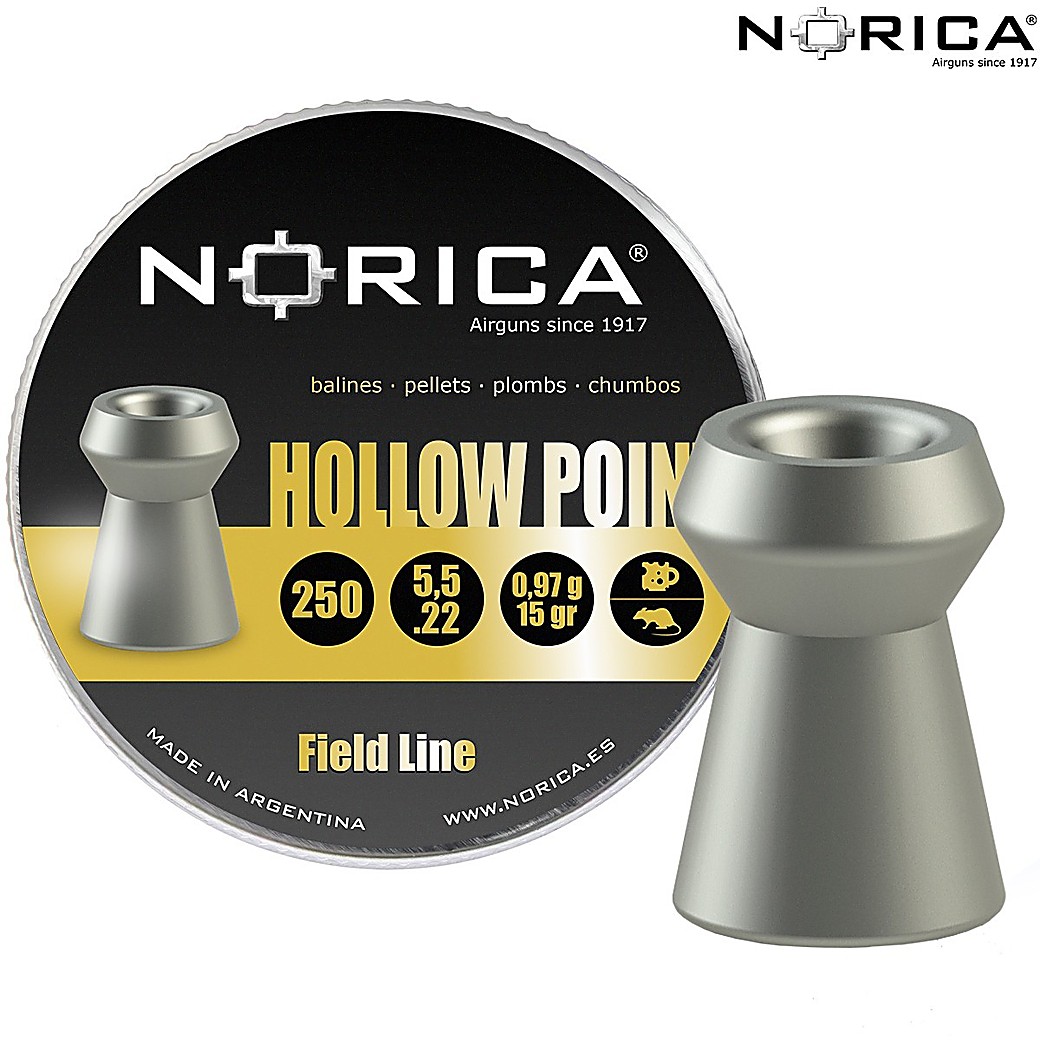
Hollow Point
Hollow Point pellets feature a cavity at the front and are designed to promote expansion on impact. Their use is therefore more closely related to impact behaviour than exclusively to achieving maximum accuracy.
At Mundilar you can also find several Hollow Point options and choose the weight and calibre best suited to your equipment and intended use.
So, which pellet shape is the most accurate?
As you have seen, there is no universal winner; it all depends on your goal. But one rule remains valid: weight and shape should be assessed together. The best pellet is the one that produces the most consistent groups in your air rifle at the distance you intend to use it.
What are the most common mistakes when choosing pellet weight?
Have you tried several pellets, adjusted the scope, zeroed everything again and your air rifle still will not group as you want? Before blaming the equipment, it is worth checking whether you are making one of these mistakes:
1. Thinking the heaviest pellet is always better
If the pellet is not suited to the characteristics and power of your air rifle, increasing the weight may not improve anything at all.
2. Choosing based on velocity alone
It is easy to look at the numbers and think: “the faster, the better”. But a high muzzle velocity does not guarantee more stable flight or tighter groups.
3. Changing weight and shape at the same time
You tested a light Match Heavy pellet and then a heavy Domed pellet, and the second grouped better. Was it because it was heavier or because of the shape? You do not know. Whenever possible, change only one variable at a time so you can understand what is really making the difference.
4. Drawing conclusions after three or four shots
A good shot can happen. A bad one can too. Shooting several groups with each pellet gives you a much more reliable idea of its performance than looking at just a few isolated shots.
5. Using the pellet that works in a friend’s air rifle
“It works perfectly in mine” is a good recommendation for starting a test, not for ending one. Even similar air rifles can produce different results with the same pellet. Test it in yours and let the groups give you the answer.
If your air rifle is not as accurate as you expected, do not immediately start adjusting everything. Test one variable at a time, compare the results and give each pellet enough time to show what it can do.
Test, test and… test again!
In the end, finding the ideal pellet is less about following a table and more about discovering what your air rifle prefers. Calibre and weight give you a good starting point, but testing and grouping are what ultimately provide the answer.
And that is precisely why Mundilar offers a wide range of air gun pellets, with different calibres, weights, shapes and brands, so you can experiment until you find the right combination. Because in the end, it does not matter which pellet works best for everyone else. What matters is finding the one that works best for you and your air rifle.
Frequently Asked Questions
Should pellet weight be chosen according to the power of the air rifle?
Yes. Air rifles with different power levels can produce different results with the same pellet weight. The ideal approach is to find a balance between weight, velocity and stability.
What is the best pellet weight for PCP, spring-powered and IGT air rifles?
There is no universal weight. PCPs can work with a wide range of pellet weights, while with spring-powered and IGT air rifles it is especially important to find a good balance between weight and velocity.
Does target distance affect the pellet weight I should choose?
Yes. As distance increases, velocity loss, pellet drop and wind influence become more significant and can affect pellet performance.
Can a pellet be too heavy for my air rifle?
Yes. A pellet that is too heavy may not reach an appropriate velocity, especially in lower-powered air rifles. Always check the manufacturer’s recommendations.
Is a more expensive pellet always more accurate?
No. Manufacturing quality is important, but the most expensive pellet is not necessarily the one that works best in your air rifle.
Do I need to re-zero the scope when I change pellet weight?
It is recommended. Changing pellet weight can alter the trajectory and point of impact, so you should check the scope zero again.
Can temperature affect pellet performance?
Yes. Environmental conditions can affect the behaviour of the system and the trajectory, especially when you are aiming for maximum accuracy.
Is it better to always use the same pellet brand and model?
If you have found a pellet that produces good groups, sticking with the same reference helps ensure greater consistency between shooting sessions.
What does “grains” mean for pellets?
Grains (gr) is the unit used to indicate pellet weight. The higher the number of grains, the heavier the projectile.
How many shots should I fire to test a pellet?
A single shot is not enough. Ideally, you should shoot several groups and repeat the test before drawing conclusions.
 Artigos Relacionados: