
Clay pigeon shooting in Portugal: how does it work and how can you get started?

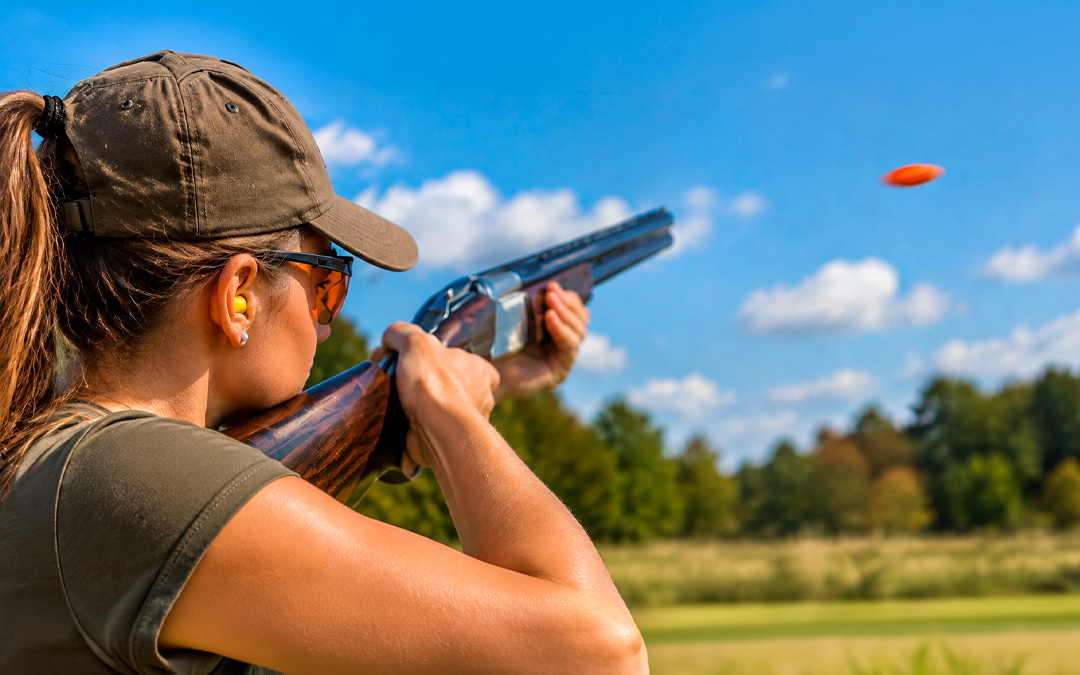
The clay leaves the trap, crosses the sky and is gone in an instant. From the sidelines, clay pigeon shooting may seem to be mainly about speed. Yet behind every broken clay there is concentration, coordination and many hours of learning.
If you are curious about this sport, you probably have a few questions: how does a competition work? Do you need your own gun? And what is the first step towards getting started in Portugal?
In this article, we explain the essentials of clay pigeon shooting and how to take your first steps with appropriate guidance.
What is clay pigeon shooting?
Clay pigeon shooting is a shooting sport in which the aim is to hit targets launched mechanically into the air. These targets, known as clays, are designed to break when hit.
Unlike precision shooting at a stationary target, the target here is moving. Its flight path, direction and launch sequence depend on the discipline.
Clay shooting uses smoothbore shotguns and cartridges suited to the discipline. It therefore differs from air rifle disciplines such as Field Target.
How does a clay shooting session work?
In an organised session, shooters take their designated stations and participate in a set order. Clays are launched according to the discipline’s rules, and hits and misses are recorded.
The number of clays, the stations used and the conditions of each launch vary. Before starting, you should therefore understand the discipline’s rules and the instructions given by the person in charge of the ground.
You do not need to memorise every rule straight away. Initially, the main priorities are understanding how the session works, learning the safety rules and becoming familiar with the club environment.
How do you read the score?
Results are often shown in rounds of 25 clays. A score of 18/25 means the shooter hit 18 of the 25 targets in that round. When a competition includes several rounds, scores are added according to its rules, which also specify tie-breaks and any finals.
A single is one target presented on its own. A double involves two clays presented according to the sequence prescribed for the discipline. Launching and scoring conditions differ between disciplines and should not be inferred simply by watching a competition.
For beginners, keeping scores can help track progress. However, compare sessions in the same discipline and under similar conditions. A lower total with a different target presentation does not automatically mean you have taken a step backwards.
What disciplines are there?
Clay shooting includes several disciplines, with different station layouts and target presentations. This comparison helps you understand what you may find at a club.
| Discipline | How the clays are presented | What makes it different |
|---|---|---|
| Olympic Trap | Targets launched from a trench in front of the stations | Directions and heights vary within a regulated scheme |
| Universal Trench | Targets launched from a group of traps in a trench | Its own schemes and rules, different from Olympic Trap |
| Olympic Skeet | Targets launched between two houses, from different stations | Crossing presentations and sequences that include doubles |
| Sporting* | Varied flight paths along a course | Different target presentation scenarios |
| Compak Sporting | Several flight paths within a more compact area | Varied presentations from five stations |
*The Portuguese name “Percurso de Caça” refers to Sporting. Despite the reference to hunting, the targets are clays: this is a sport using artificial targets.
Each of these five disciplines has its own rules, so the best way to get to know them is to visit a club and watch a session. This helps you understand the differences before choosing the one you would like to explore.
How can you start clay pigeon shooting in Portugal?
1. How do you choose a club to get started?
The first step is to find a club that offers clay shooting. Ask how beginner sessions work, whether guidance is available for newcomers and what the conditions are for accessing its facilities.
If you only want an introductory experience, check beforehand whether the club offers one and what requirements apply. Do not assume that simply turning up at the ground will allow you to participate.
2. Which licences and documents should you ask about?
Regular participation involves federation and legal requirements. Within the FPTAC framework, the Licença Federativa E is part of those requirements, alongside the applicable authorisation issued by the PSP, insurance and firearm documentation, as relevant.
The federation licence and the authorisation issued by the PSP serve different purposes. The club can guide you through the process and explain which documents are needed in your situation.
3. Should you buy equipment before trying the sport?
Buying a shotgun does not have to be your first step. Before investing, ask the club about beginner options and the use of equipment under the legally permitted conditions.
Discovering the sport with guidance helps you make better-informed decisions about equipment and the commitment you want to make.
Where can you practise clay shooting in Portugal?
If you want to take up clay shooting, start by finding a shooting club with suitable facilities for the discipline.
In Portugal, you can consult the Federação Portuguesa de Tiro com Armas de Caça (FPTAC) for information about clubs, disciplines and competitions.
Before choosing a club, check whether it offers beginner sessions, what participation requirements apply and which costs are involved.
What happens on your first visit to a club?
Imagine you have never been to a shooting ground. The best starting point is a visit arranged with the club, so you can see the facilities and speak to the people who guide newcomers. If a legally compliant introductory activity is planned, find out beforehand who will supervise it and what is included.
Bring your questions: are lessons individual or in groups? Is equipment provided? How are clays and cartridges charged? What documents must you present before participating? Ask about competitions too, if that interests you. These questions help you compare the actual arrangements at different clubs and decide how to get started.
During the session, follow the supervisor’s instructions and respect waiting areas and circulation routes. Hearing and eye protection should be in place before exposure to gunfire. Initial guidance also helps you learn these routines, which are part of the sport from day one.
What equipment do you need for clay shooting?
In addition to a suitable shotgun and ammunition, hearing protection and safety glasses are essential equipment. Clothing should allow comfortable movement, and footwear should be stable and suitable for the surface.
Check the discipline’s and ground’s requirements with the club before your first session. This helps you avoid unnecessary purchases and arrive prepared.
What accessories can you find at Mundilar?
Protection and comfort deserve attention before more specialised accessories. In Mundilar’s clothing and protection category, you can find:
| Product | Features listed on the product page | What to assess |
|---|---|---|
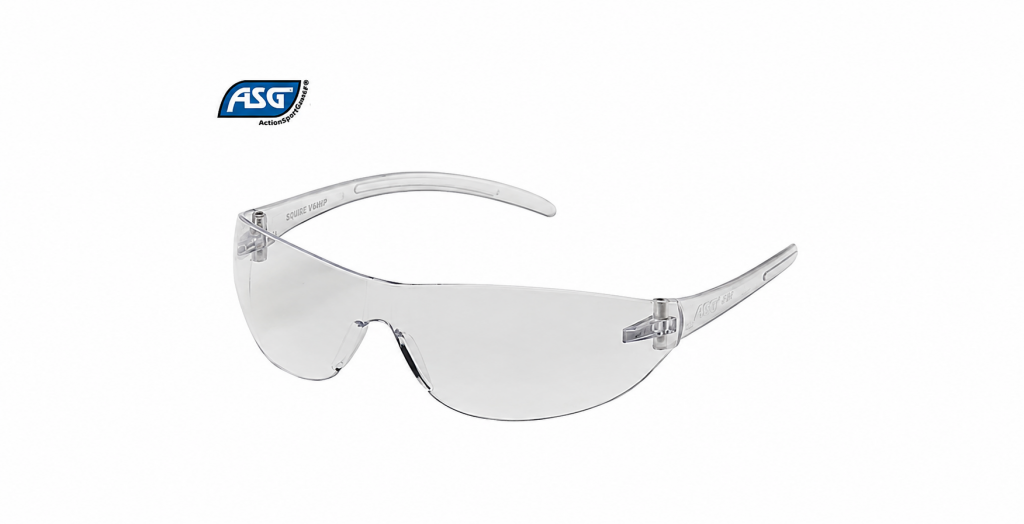
| ASG glasses with adjustable temples | Clear lenses, adjustable temples and frame ventilation | Fit, compatibility with hearing protection and the ground’s requirements |
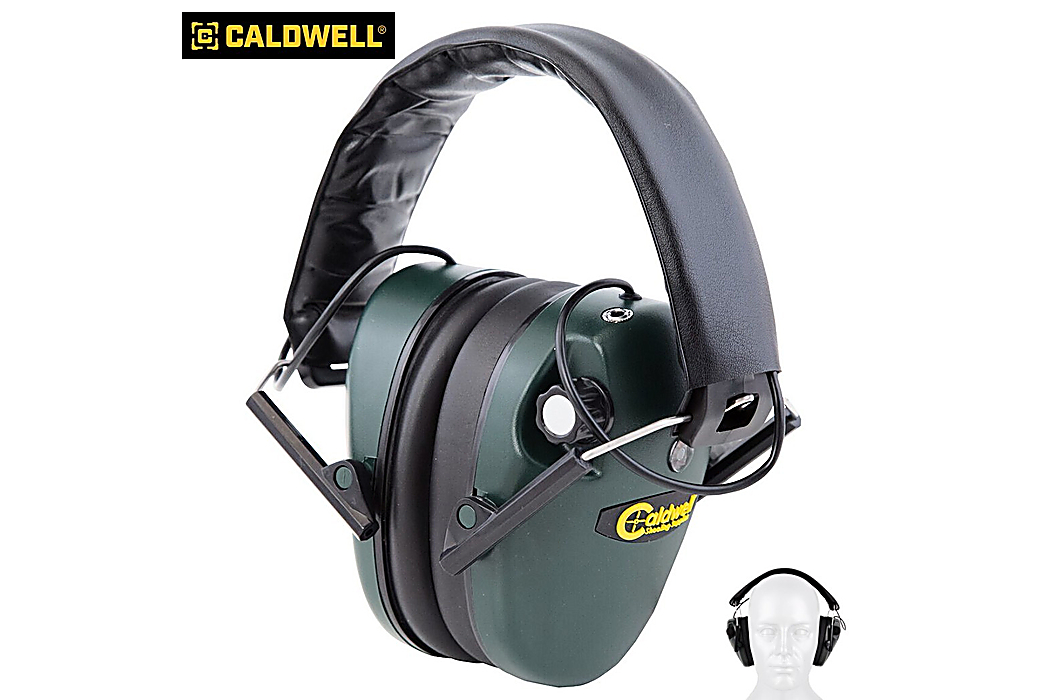
| Caldwell E-max electronic hearing protection | Electronic system that responds to loud sounds | Fit, manufacturer-stated attenuation and comfort when worn with glasses |
| Caldwell Range Plugs with cord | Earplugs with cord and clip | Correct fitting, hygiene and suitability for the noise level |


The choice of protection should be checked for its intended use. A higher price or electronic features alone do not guarantee the best solution for everyone.
Also, remember that you may not need to pay for all of this at the outset. Ask the shooting club what is essential before you can start shooting.
What costs should you budget for clay shooting?
Getting started costs more than simply buying equipment. Some expenses relate to joining the club and obtaining documents, others recur over time, and consumables depend on the number of sessions.
To plan your budget, separate the costs as follows:
| Expense | What it may include | When to budget for it |
|---|---|---|
| Registration and introduction | Club membership and lessons or beginner sessions, where charged | At the start; lessons may be paid for individually or as a package |
| Licences and insurance | Issue or renewal of applicable licences and insurance | Initially and on renewal, according to each document’s validity |
| Club fees | Membership fees and any conditions for accessing facilities | At the intervals specified by the club |
| Clays and cartridges | Rounds completed and ammunition used | At each session, according to consumption and the price list |
| Personal equipment | Glasses, hearing protection and other necessary items | Initial purchases and whenever equipment needs replacing or renewing |
Before booking a session, ask whether the price includes clays, cartridges, supervision and equipment use, where available. This helps you understand the total cost and compare offers without overlooking expenses.
For example, if you plan to practise twice a month, calculate the expected cost of those two sessions and add membership fees and the appropriate share of annual expenses. This estimate is more useful than looking only at the price of a round of clays.
Clay shooting is not the only option for newcomers to shooting sports. Other activities include Plinking, associated with recreational shooting, and Field Target, a precision discipline using air rifles. Each involves different equipment needs and costs. To explore other options, also discover how to choose a PCP air rifle.
Where can you find accessories for your shooting equipment?
At Mundilar, you will find accessories for shooting sports, including safety glasses and hearing protection such as the examples featured in this article.
Visit the Mundilar online shop and discover our selection of shooting accessories. If you need help choosing, contact us at [email protected] or through our contact page. Our team can explain product features and help you find options suited to your needs.
Answers to frequently asked questions about clay shooting
Can I shoot clays with an air rifle?
No. Conventional clay shooting disciplines use smoothbore shotguns and suitable cartridges. Air rifles are intended for other disciplines, such as Field Target, and do not replace the equipment used for clay shooting.
Do I need to buy a shotgun before starting?
You should not treat that purchase as your first step. Contact a club and ask whether it offers beginner sessions with equipment and under what legal conditions it can be used. Trying the sport first helps you decide whether to continue and choose equipment with guidance.
Do I need experience to get started?
You can approach a club without any experience. The important things are understanding how introductory sessions work, meeting participation requirements and learning with guidance. Familiarisation with the facilities and safety rules should come before any practice.
Can I practise clay shooting on any land?
No. Practice should take place at authorised facilities suitable for the discipline. Owning private land does not mean it is authorised for clay shooting. Find a club and confirm the conditions for accessing its ground.
What protection should I bring to my first session?
Hearing protection and safety glasses are essential. Before visiting, ask the club about its requirements and whether any equipment is provided. Wear comfortable clothing and stable footwear suitable for the surface and weather.
How much does it cost to start clay shooting?
There is no single figure. The total depends on the club, introductory sessions, applicable licences and insurance, equipment and how often you practise. Ask for a quotation separating initial expenses, membership fees and session costs, including clays and cartridges.
At what age can I start clay shooting?
The minimum age for clay shooting in Portugal depends on the discipline and applicable legal requirements. To confirm beginner participation conditions, consult an affiliated club or the Federação Portuguesa de Tiro com Armas de Caça (FPTAC).
 Artigos Relacionados: