
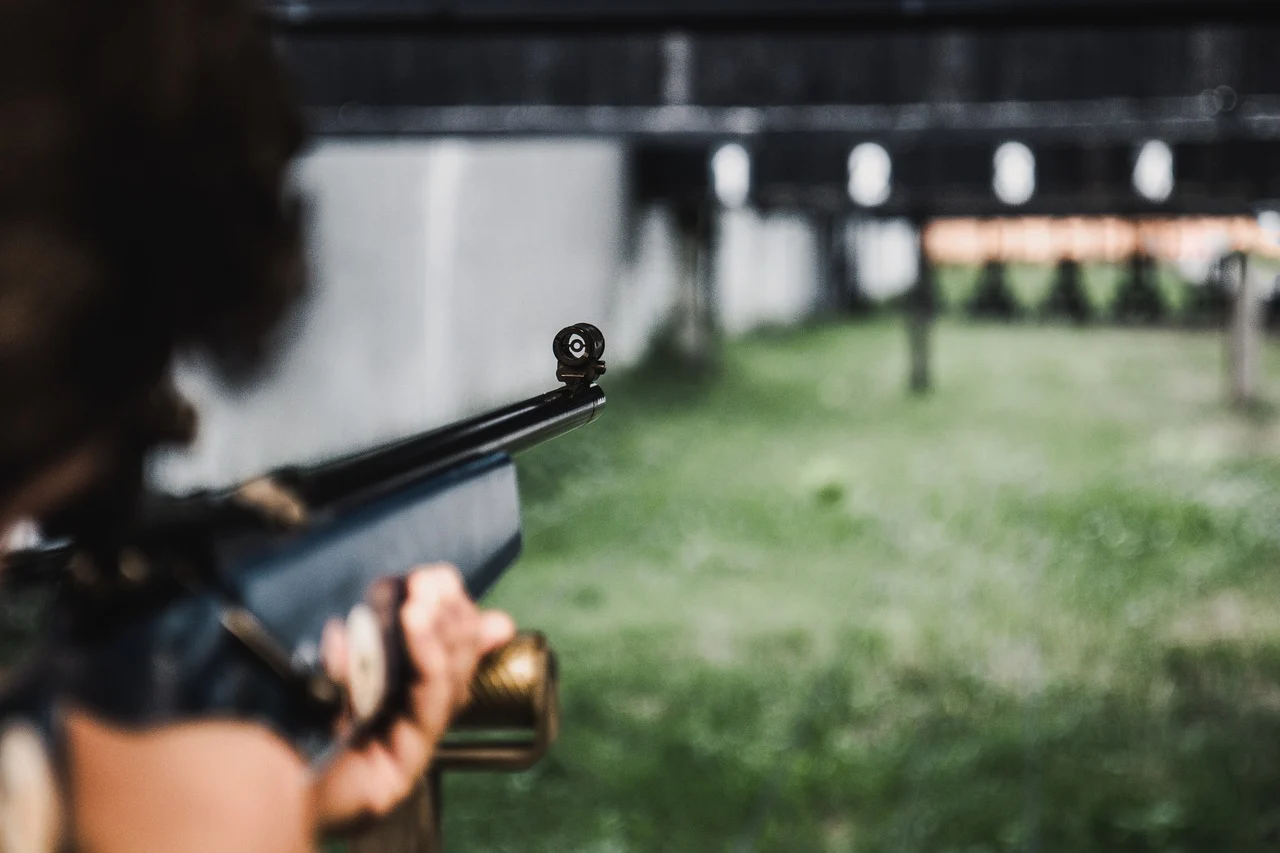
How to safely set up a home shooting range?
Would you like to train more often, but you don’t always have the availability to travel to a shooting range? Do you want to test a new telescopic sight, try different pellets, or determine whether your rifle is truly well tuned?
If you already have the equipment ready, then only one thing is missing: a suitable area to train at home. Creating your own space for shooting practice can be an excellent way to train more regularly, improve shot consistency and better understand your rifle’s behavior.
But there is one rule that comes before all others: safety must always come first. Setting up a shooting range at home does not simply mean choosing a location, placing a target and starting to shoot. It is essential to consider the location, the shooting direction, the surrounding area and the materials used to ensure responsible practice.
In this guide we will explain how to set up a shooting area at home safely, which elements are essential, how to choose the right location and what precautions you should take to create an organized training zone.
Is it possible to set up a shooting range at home?
Creating a private training area depends on several factors, such as the applicable legislation, the equipment used, the purpose of use and the characteristics of the chosen space.
Before you create a training area, check the rules in force with the competent authorities. The recommendations in this article are safety guidelines and do not replace verification of legal requirements.
Can I shoot a rifle on my property?
It depends on the characteristics of the location, the equipment used and the applicable rules. Owning private property does not, by itself, mean that any area can be used as a training zone.
The chosen location must allow you to control the shooting area and ensure safe use.
What should I consider before creating a training area at home?
Before you proceed, there are four main aspects you should consider:
- Available space — assess the characteristics of the location and whether it allows you to create a controlled area.
- Equipment used — this influences the precautions required and the preparation of the space.
- Purpose of use — the type of training may demand different levels of preparation.
- Applicable legislation — always confirm the requirements based on the equipment and context of use.
Is a private training area the same as an official shooting range?
No. They are different concepts.
A private training area corresponds to a space used in a controlled way by the user themselves, while an official shooting range is a facility created to host multiple shooters and is subject to specific operational and safety requirements.
More than just choosing a place to shoot, the goal should be to create an area where you can control the entire process, from the shooting direction to the projectile’s path. The user is responsible for ensuring that practice is carried out safely, without endangering nearby people, animals or property.
What do I need to set up a shooting range at home?
✓ Quick answer: To set up a shooting range at home you need an appropriate training location, a rifle suited to the intended use, a target, a projectile containment system and some supporting accessories.
Each of these elements contributes to creating a safer, more organized training area that matches your objectives. Below we explain the main precautions to take when preparing each of them.
1. Choose the training location
The first step is to correctly choose the location where you will train. Ideally it should be a private, controlled area with no people or animals passing through during use. For that, pay attention to:
- Area without foot traffic: avoid locations where someone could unexpectedly enter the shooting line;
- Good visibility: ensure you can clearly identify the target and the entire surrounding area;
- Organized space: keep the area free of obstacles that could interfere with training.
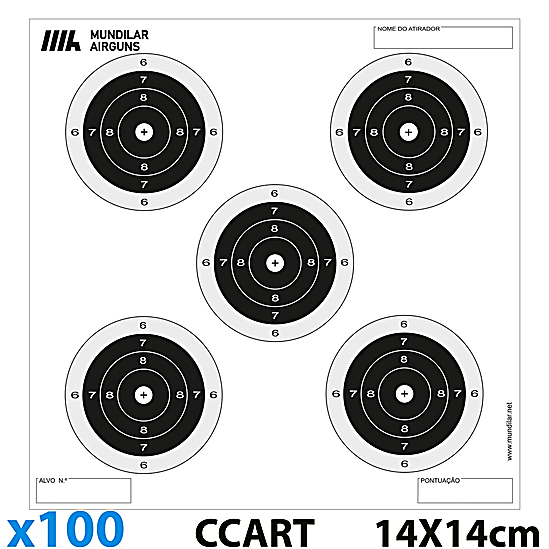
2. Suitable target
After defining the space, you also need to choose a target suitable for the type of training you intend to carry out.
The target is not only for seeing where the pellet hit. It allows you to analyze impacts, evaluate your rifle’s precision and track the progression of your shots.
The choice should depend on the training objective, whether zeroing the sight, testing different pellets or simply practicing shot consistency.
If you want to learn more about the different types of targets and which options are best for each situation, also check our articles:
“Printable shooting targets: free A4 options” — where we show different target templates to train at home simply and practically.
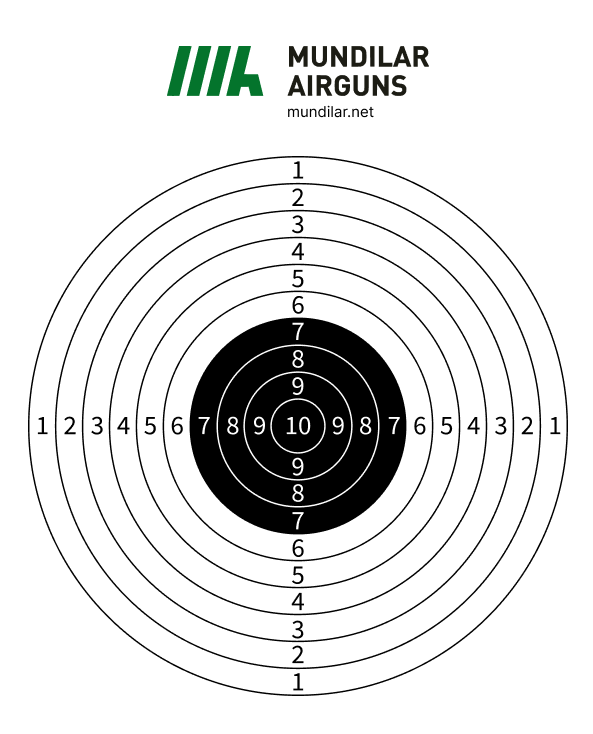
“Types of targets used in sport shooting practice” — where we explain the differences between various types of targets and their use in sport shooting. You can also consult the Training – Shooting Targets category in the Mundilar store.
3. Ensure a projectile containment system
One of the most important points when creating a shooting area is to think about what happens after impact.
The target should not be seen as the end of the projectile’s path. It is essential to ensure there is an adequate solution to control the projectile and avoid uncontrolled areas.
Before you start training, always assess:
- what is behind the target;
- the possibility of ricochets;
- the capability of the material used to control impacts.
4. Protective equipment
Even in a private environment, the use of protective equipment should be part of the training routine.
Some important accessories include, for example, protective equipment for sport shooting:
- Protective glasses: help protect the eyes from potential fragments or ricochets;
- Equipment suited to the type of use: ensures greater comfort and safety during shooting.
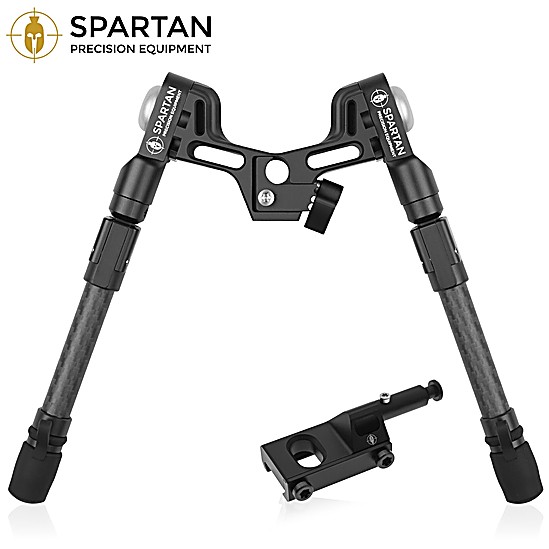
5. Training supports and accessories
Although not mandatory, some accessories can help make training more consistent. A bipod, shooting bag or other stable shooting rest helps reduce movement during the shot and allows better evaluation of the rifle’s precision.
On Mundilar you will find different solutions for supports and shooting accessories that can help create a more comfortable and stable shooting position.
What is the best place to set up a shooting range at home?
The choice between an indoor or outdoor space depends mainly on the available space, the distance you intend to use and the level of control you can guarantee during shooting.
Indoor shooting range
An indoor space, such as a garage or a specially prepared area, can be a good option for those seeking greater control during training.
Advantages:
- ✓ Greater control of conditions: reduces the influence of external factors such as wind or weather changes;
- ✓ More consistency in training: allows repeating shots in more similar conditions.
Precautions to take:
- ✓ Sufficient space: ensure you have an area adequate for shooting and correctly positioning the target;
- ✓ Safety: confirm that the location is prepared to control impacts and that there are no passage areas;
- ✓ Adequate ventilation: important to keep the space comfortable during use.
Outdoor shooting range
An outdoor space can be an interesting alternative for those seeking greater distances and training with more variables.
Advantages:
- ✓ Greater shooting distance: allows training at different distances and better testing of the rifle’s behavior;
- ✓ Different training conditions: allows you to understand the influence of factors such as wind and environmental conditions.
Precautions to take:
- ✓ Control the surrounding area: always check what exists around the shooting area;
- ✓ Ensure there are no people or obstacles: the area must be fully controlled during use.
Regardless of whether you choose an indoor or outdoor space, the most important thing is to ensure you can control the entire path of the shot and create an area where training can be carried out safely and in an organized way.
How to ensure safety in a domestic shooting range?
Safety must be present at all stages of training, from preparing the space to the moment of firing. A well-organized domestic shooting area allows you to practice with greater confidence and reduce potential risks.
Define a shooting zone
An organized training area should have well-defined zones so that the entire process is simpler and more controlled.
You should consider:
- Firing line: the place where you will position the rifle and take the shots. It should be a stable, comfortable area with no foot traffic;
- Target area: the area where you place the targets and analyze the shot results;
- Area behind the target: an area that allows you to control what happens after impact and ensure the projectile’s path is properly contained.
Having these areas well defined helps create better habits during training.
Always control the shooting direction
Before each session, always confirm that the shooting direction is defined and that the surrounding area remains clear.
Avoid using spaces where you cannot determine what lies beyond the target or where people or animals might appear unexpectedly.
Some simple habits make a difference:
- prepare all equipment before you start;
- confirm the target position;
- check the area again before each session.
Avoid ricochets
The projectile’s behavior after impact depends on several factors, including the materials used and how the target is set up.
Therefore, when creating your training area, you should pay attention to:
- the material used in the target;
- proper installation of the target;
- how impacts are controlled.
Keep the space organized
An organized training area makes equipment use easier and helps maintain a safer routine.
Try to keep:
- rifles and accessories properly stored;
- pellets organized and prepared before training;
- the firing area free of unnecessary objects.
What is the ideal distance for a home shooting range?
The ideal distance depends on the available space, the rifle used and the type of training you intend to perform. There is no single distance that is perfect for all shooters, but there are some references that can help define the best option.
If you are creating a training area at home, it is important to choose a distance that allows you to practice comfortably and consistently. Starting at a shorter distance can be a good way to understand the rifle’s behavior, test the sight and build confidence before increasing difficulty.
| Distance | Use |
|---|---|
| 10 to 25 metres | Ideal for initial adjustments, sighting in and early precision training |
| 25 to 50 metres | Allows better testing of the rifle’s behavior, comparison of different pellets and evaluation of different configurations. |
| More than 50 metres | Requires more space, greater control of the shooting area and attention to factors such as wind and projectile trajectory. |
Common mistakes when setting up a home shooting range
Creating a training area at home may seem simple, but some common mistakes can compromise the space’s safety and make it harder to achieve good results.
Often, the problems are not in the rifle or the sight, but in how the space is prepared or in the way training is conducted.
| Error | Consequence | Solution |
|---|---|---|
| Choosing an uncontrolled location | Lack of safety | Define an appropriate zone |
| Not considering what happens after the target | Lack of projectile control | Properly prepare the area behind the target |
| Using inappropriate equipment | Inconsistent results | Choose suitable materials |
| Changing several things at once | Difficulty understanding improvements | Test one variable at a time |
One of the most common mistakes is trying to fix everything at once. Changing the ammunition, adjusting the sight and altering the firing position in the same session makes it harder to understand what is actually working.
More consistent training involves controlling variables, repeating the same conditions and making changes gradually.
Now that you know how to prepare a home shooting range more safely, we want to know: what other topics would you like to see explained on the Mundilar blog?
Share your questions and suggestions with us via email [email protected]. Your feedback helps us create more useful content tailored to the needs of the shooting community.
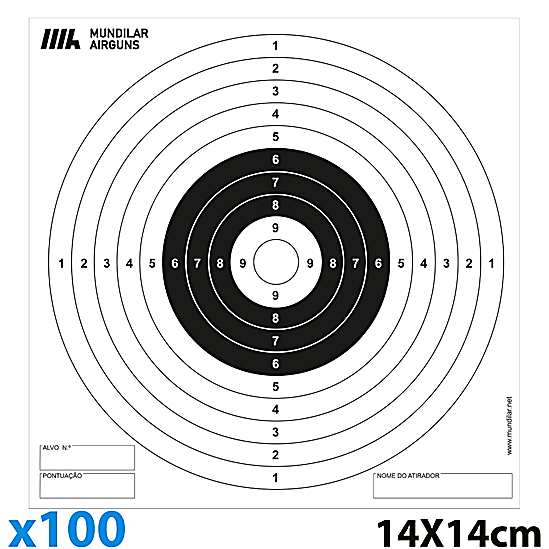 | 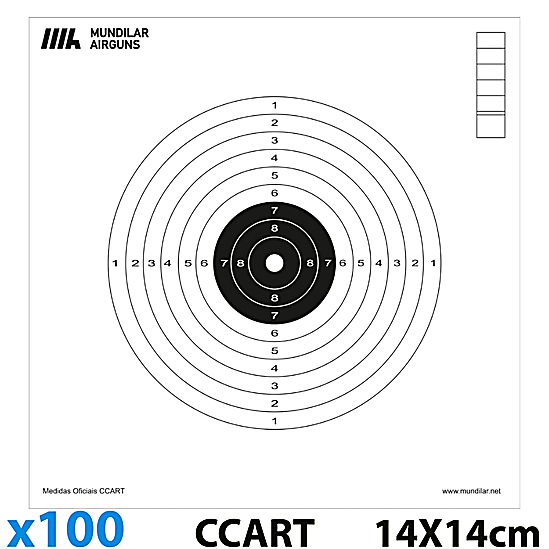 |
 |  |
Frequently Asked Questions
Can I set up a shooting range at home in a garage?
A garage should only be considered if its use is legally permitted and if the space meets appropriate safety, ventilation, access control and projectile containment conditions.
What precautions should I take before I start shooting at home?
Before starting training, always confirm the preparation of the space, the target position, the surrounding area and all elements necessary for safe use.
How many metres do I need to set up a shooting range at home?
There is no single ideal distance. The required space depends on the type of rifle, the training objective and the conditions you can guarantee at the location.
What should I place behind the target in a domestic shooting range?
It is important to have a solution that allows you to control the projectile’s impact and avoid uncontrolled areas after the target. Preparing that area is one of the most important parts of the space’s safety.
Which accessories help improve home shooting practice?
Shooting rests, bipods, suitable telescopic sights and different types of pellets can help make training more consistent and facilitate analysis of the results.
How can I improve accuracy by training in a home shooting range?
Consistency is fundamental. Maintaining the same shooting position, testing one variable at a time and recording results helps you better understand the rifle’s behavior and progress with each session.
 Artigos Relacionados: